Bees · Xylocopa virginica
Carpenter bees
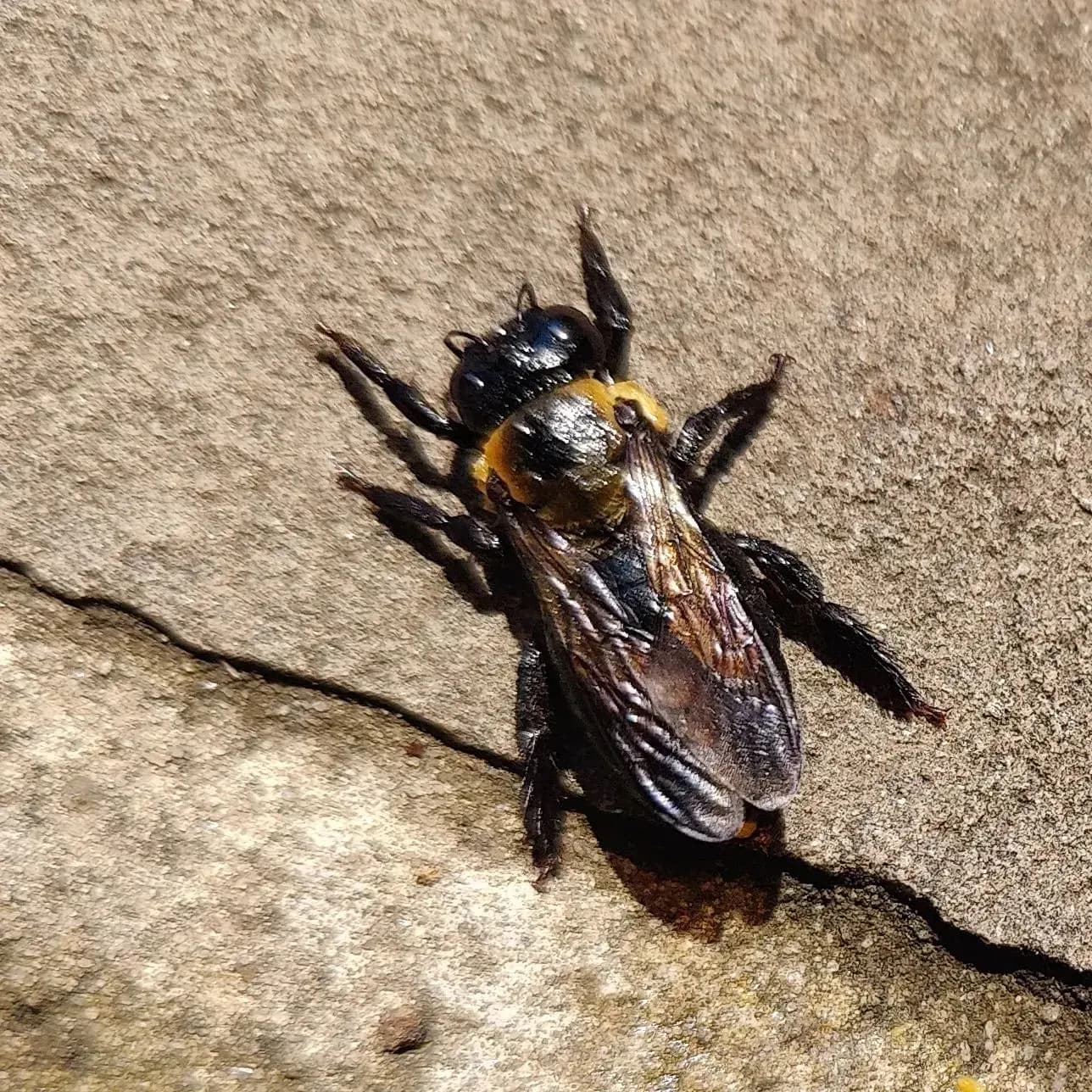
Carpenter bees are large black-and-yellow bees that drill round, half-inch holes into bare or weathered wood to nest. Males can't sting and females rarely do, but years of reused tunnels can damage eaves, decks and trim. They're very common in Southeast Tennessee, with activity peaking in April and May.
Seasonal activity
When they're active in Southeast Tennessee
Carpenter bees are out drilling nest holes in eaves, decks and trim.
- January: Inactive
- February: Inactive
- March: Low
- April: Peak
- May: Peak
- June: Moderate
- July: Low
- August: Moderate
- September: Low
- October: Inactive
- November: Inactive
- December: Inactive
Signs you have them
- Perfectly round holes about 1/2 inch across, usually on the underside of boards
- Small piles of coarse sawdust on the ground or surfaces right below the holes
- Yellowish-brown stains from bee waste below the entrance holes
- Large bees hovering around the eaves or deck in spring and buzzing at anyone who comes close
- Buzzing or chewing sounds coming from inside the wood
- Woodpecker holes or torn-up wood along the fascia, a sign larvae are inside
Carpenter bee or bumble bee?
Look at the rear end
A carpenter bee's abdomen is shiny and nearly bare. A bumble bee's is fuzzy all over with yellow and black hair.
Look at where it's going
Carpenter bees disappear into round holes in wood. Bumble bees nest in the ground, often in old rodent burrows or under thick grass.
Look at the behavior
A carpenter bee hovering in your face near the porch is almost always a male guarding territory. He's all bluff and has no stinger.
Why they're a problem here
Adults spend winter inside old tunnels and come out as the weather warms in spring, usually April and May here. Females bore an entrance about an inch into the wood, then turn and tunnel along the grain, laying eggs in a row of cells stocked with pollen. The new generation emerges in late summer, then settles back into the tunnels for winter.
One season of drilling causes only minor damage. The trouble is that bees come back to the same wood year after year and extend the old galleries, which can eventually run several feet. Woodpeckers hunting for the noisy larvae then tear into the boards, often doing more damage than the bees. The wood homes around here use for porches, decks and trim, such as pine and cedar, is exactly what they like.
Carpenter bees are also useful pollinators, so the goal is to protect your house, not wipe out every bee in the neighborhood.
How we treat them
- 01
Treat active galleries
A dust labeled for carpenter bees is applied directly into each active hole, where it reaches the bees and larvae inside. Surface sprays alone don't do much.
- 02
Wait, then seal
Holes are left open for a short time so returning bees contact the treatment. Then they're plugged with a dowel, wood putty or caulk so the tunnels can't be reused.
- 03
Protect the wood
We recommend painting bare wood and point out the boards that are attracting bees. Badly damaged wood should be replaced.
Prevention
What you can do today
- Paint exposed wood with an oil-based or polyurethane paint; stain alone offers little protection
- Fill old holes, nail holes and exposed saw cuts with wood putty or a glued dowel, then paint
- Replace badly tunneled boards with pressure-treated wood or a non-wood material
- Consider vinyl, aluminum or composite for fascia, soffits and deck rails, which bees don't bore into
- Check eaves, deck rails and porch ceilings each spring for fresh holes and sawdust so new nests get handled early
- Hang carpenter bee traps near problem areas in early spring to reduce numbers
When to call us
Pest control
Inspection-first treatment for the everyday pests that get into Tennessee and North Georgia homes.
How we treat itQuestions
Carpenter bees FAQ
Do carpenter bees sting?
Males, the ones that dive-bomb you near the porch, have no stinger at all. Females can sting but rarely do unless they're handled or trapped against your skin. They're far less likely to sting than wasps or yellowjackets.
Do carpenter bees eat wood?
No. They chew tunnels to raise their young and push the sawdust out, but they feed on pollen and nectar. The damage comes from the tunneling, which builds up over years.
Why are woodpeckers pecking at my house?
If they're working along eaves, fascia or trim, they're often after carpenter bee larvae inside the tunnels. Dealing with the bees usually ends the woodpecker damage too.
Does painting stop carpenter bees?
Painting helps a lot, since bees strongly prefer bare, weathered wood, but it doesn't make wood completely bee-proof. Several coats of oil-based or polyurethane paint are far better than stain, which gives little protection.
When are carpenter bees most active in Tennessee?
The most noticeable activity is in April and May, when adults come out, mate and drill new holes. A second, smaller wave of bees shows up in late summer when the new generation emerges, and then they go quiet for winter.
Think you have carpenter bees?
Tell us what you're seeing and where. We'll call you back to schedule.